Concrete Slabs in Seattle: Planning Your Quote
 Seattle ConcreteCONTRACTORS
(206) 566-0528
Need a garage, shed, ADU or hot tub slab in Seattle? Here’s how we size the base and slab, typical prices, and what to send for a quote.
- Base and compaction sized to the load
- Vapor barrier and thickened edges where needed
- Flat or sloped to drain, as the use needs
Get a slab quote in Seattle
Tell us about the project. We’ll call or email to talk it through.
Concrete Slabs for Seattle properties
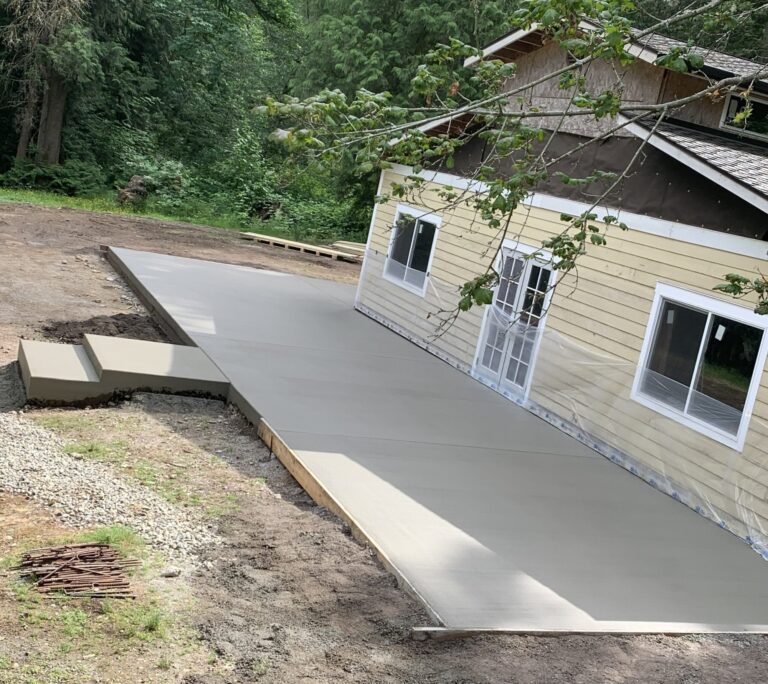
A slab is the simplest thing we pour and the easiest to get wrong. Flatness, thickness, base and edges change with what sits on it: a hot tub, a car, a shed, or a living space. We start with the use and the soil, then size the slab to match.
Craftsman bungalows, Tudors, and mid-century houses with original concrete are common, alongside new townhomes and backyard cottages (DADUs) that need new slabs and walks. We work across Ballard, Wallingford, Queen Anne, Magnolia, Capitol Hill, Beacon Hill, West Seattle, Rainier Valley, Lake City and Northgate.
Garage slabs
Thickened edges, reinforcement and a slope toward the door.
Shed and studio pads
Level pads sized for the building.
ADU and cottage slabs
Slab-on-grade foundations poured to plan.
Seattle conditions that affect your slab
Soil and settling
Soils change block to block: dense glacial till on many ridges, softer fill and old wetland soils in lower areas like parts of the Duwamish valley, Interbay and around the lakes. A slab that keeps sinking usually points to a soft or wet base.
Yards and access
Back yards are often small, shaded, and reached through a narrow side yard or alley. Concrete sometimes has to be pumped or wheeled in, which affects the schedule and the price.
Rain and drainage
Long rainy seasons mean water management decides how long concrete lasts: slope away from the house, joints that drain, and somewhere for downspout water to go.
Details that help us price your slab in Seattle
You don’t need answers to all of these. They’re the questions that shape the design and the price.
Use
Garage, shed, ADU, hot tub or equipment.
Size
Length, width and any plans.
Site
Photos of the area, slope and access.
Existing
An old slab, pavers or lawn to remove.
Permit
Is it part of a permitted building?
Timing
When the building or tub arrives.
Options to talk through
| Slab | Typical use | Keep in mind |
|---|---|---|
| Utility / shed slab | Sheds, bins, equipment | Simple base and broom finish |
| Garage slab (monolithic) | Garages and carports | Thickened edges, rebar grid, vapor barrier |
| Slab-on-grade foundation | ADUs and additions | Built to plans and inspected |
| Hot tub pad | Spas | Flat and reinforced for heavy point loads |
Permits for concrete slabs in Seattle
Foundations and slabs for additions, garages, backyard cottages and other buildings are part of the SDCI building permit, with footing and steel inspections before the pour. Check SDCI’s permit guide for your address.
Planning a new slab in Seattle?
Call to talk it through, or send a few details and photos.
What concrete slabs typically cost in the Seattle area
Ballpark numbers help you plan a budget before anyone visits. Use them as a starting point, not a promise.
| Slab | Typical range |
|---|---|
| Basic utility or shed slab | from about $5 per sq ft |
| Garage slab (monolithic) | from about $7 per sq ft |
| Slab-on-grade with base, vapor barrier and rebar | $6–$14 per sq ft |
Typical market ranges, not a quote from Seattle Concrete Contractors. These are ranges other Seattle-area concrete contractors publish for this work (Seattle-WA-Concrete and Seattle Concrete (seattleconcrete.com) published price guides, checked November 2026). Your price depends on size, access, removal, base work, finish and permits, and on conditions at your Seattle property. We give a written quote after we understand the job.
Concrete Slabs in Seattle: quick answers
How thick should a slab be?
It depends on the use: shed pads are thinner than garage floors, and structural slabs follow the plans.
Do I need a permit for a slab?
Slabs for garages, ADUs and enclosed buildings are part of a building permit. Simple pads and patios often aren’t.
Do I need a vapor barrier?
Under anything enclosed, yes. Outdoors, it depends.
Do I need a permit for concrete work in Seattle?
It depends on the job. SDCI generally requires a grading permit when you add or replace 750 sq ft or more of paving, and walls taller than 4 ft measured from the bottom of the footing need a permit. Anything in the sidewalk, planting strip or driveway apron is right-of-way work that goes through SDOT.
Learn more about concrete slabs
See the full concrete slabs guide, or all concrete services in Seattle.
More concrete services in Seattle
Tell us about your project
A few photos and rough measurements are enough to start. If you’re not sure what the job needs, describe the problem and we’ll talk it through.
Call (206) 566-0528 or use the quote form at the top of this page.
Find us on Google Maps
Seattle Concrete Contractors | (206) 566-0528 | Seattle, WA